Conducting Employee Engagement Surveys – Step by Step Guide

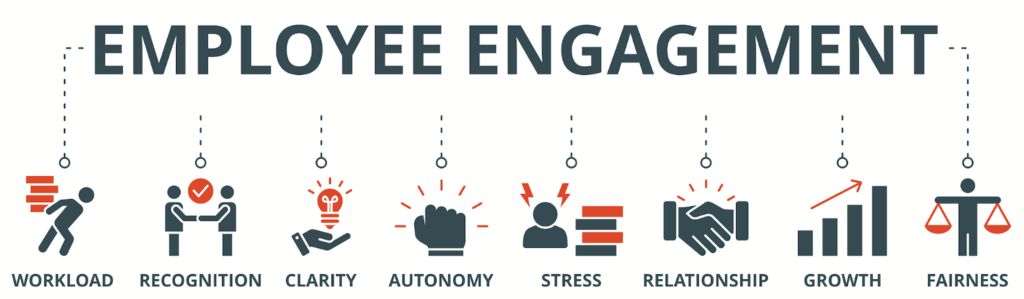
A Step-by-Step Guide
Employee engagement surveys are a valuable tool for organizations that want to understand the level of engagement among their employees. By surveying employees, organizations can identify areas where they can improve their work environment and culture, which can lead to increased productivity, satisfaction, and retention. This article provides a step-by-step guide on how to conduct an employee engagement survey and provides best practices to consider for optimal results.
Step 1: Define Survey Objectives
The first step in conducting an employee engagement survey is to define your objectives. What do you hope to achieve by conducting the survey? Do you want to:
- Increase employee overall satisfaction?
- Identify areas for improvement within the organization.
- Reduce turnover?
Clearly defined objectives guide the formation of questions and ensure results that are pertinent and actionable.
Step 2: Draft the Survey
The survey should include a mix of quantitative and qualitative questions. Quantitative questions, such as those that use Likert scales, can provide measurable data about employee satisfaction. Qualitative questions, on the other hand, allow employees to provide open-ended feedback, which can give you deeper insights into their experiences.
Here are some examples of questions that you could ask in an employee engagement survey:
- Quantitative questions:
- How satisfied are you with your job overall?
- How likely are you to recommend our company to a friend or colleague?
- How often do you feel like you are able to use your skills and abilities in your work?
- Qualitative questions:
- What do you like most about working here?
- What could be improved about our work environment?
- What suggestions do you have for how we can better support our employees?
Step 3: Conduct the Survey
Once you have drafted the survey, you need to decide on a tool or platform to administer the survey on. There are various tools available in the market to help accomplish this step. Some of the examples include Glint, Qualtrics, CultureAmp which specialize in employee experience surveys. Ensure that the process is user-friendly and provides confidentiality/anonymity, which encourages honest and candid responses. Confidentiality means that the employee-level data is only available to select individuals within the People team. Anonymity means that the survey results cannot be tied back to an individual.
Step 4: Analyze the Results
After collecting the responses, it’s time for analysis. Quantitative responses can be statistically analyzed to provide a broad overview of engagement levels, while qualitative responses require thematic analysis to identify common trends and issues. The analysis should allow you to draw conclusions aligned with your survey objectives. The level of complexity in the analysis varies depending on the complexity of the questions you are looking to answer, sample size of the responses, and tools/skill set available to you. Some of the questions you should look to explore in your analysis (sorted by complexity):
- Which areas of the business have the lowest engagement?
- How engaged are diverse groups of people (i.e. women, people of color) at the company in relative to other groups?
- Is there a correlation between engagement scores and performance scores?
- What are the drivers of employee engagement?
- What is the relationship between engagement scores and actual attrition?
The analysis should help you to identify areas for improvement and develop action plans.
Step 5: Communicate the Findings
The final step is to communicate the findings of the survey to employees. Communication of findings is a critical yet often overlooked step. Share the results and action plans with employees to demonstrate that their feedback is valued and acted upon. This transparency can lead to increased trust and engagement.
A few practical tips:
In addition to the steps outlined above, there are a few best practices to keep in mind when conducting an employee engagement survey. These include:
- Conducting regular surveys. Employee engagement is not a one-time check. Conducting regular surveys, whether annually or semi-annually, helps track changes in sentiment and the impact of any measures implemented.
- Ensuring confidentiality/anonymity. Employees need to feel safe and comfortable providing honest feedback. This means that the survey must be confidential (i.e. employee-level data is only available to select individuals within the People team) or anonymous (survey results cannot be tied back to an individual).
- Focusing on action. The end goal of any survey is to take action. Your analysis should identify areas of improvement and guide the development of strategies to enhance engagement.
- Create a Feedback Loop: The process should not end at implementing changes. Create a feedback loop where you assess the impact of your actions, possibly through subsequent surveys or informal feedback sessions.
- Expert Involvement: Consider involving HR experts or I/O psychologists in designing and interpreting your survey. They bring a deeper understanding of the dynamics of employee engagement.
Conducting an employee engagement survey is an insightful process that enables organizations to better understand their teams and create an environment that fosters engagement and productivity. By applying these steps and best practices, you can develop a survey that provides invaluable insights and actionable steps to increase employee engagement.